
Agentic AI
What Companies Get Wrong About Agentic AI
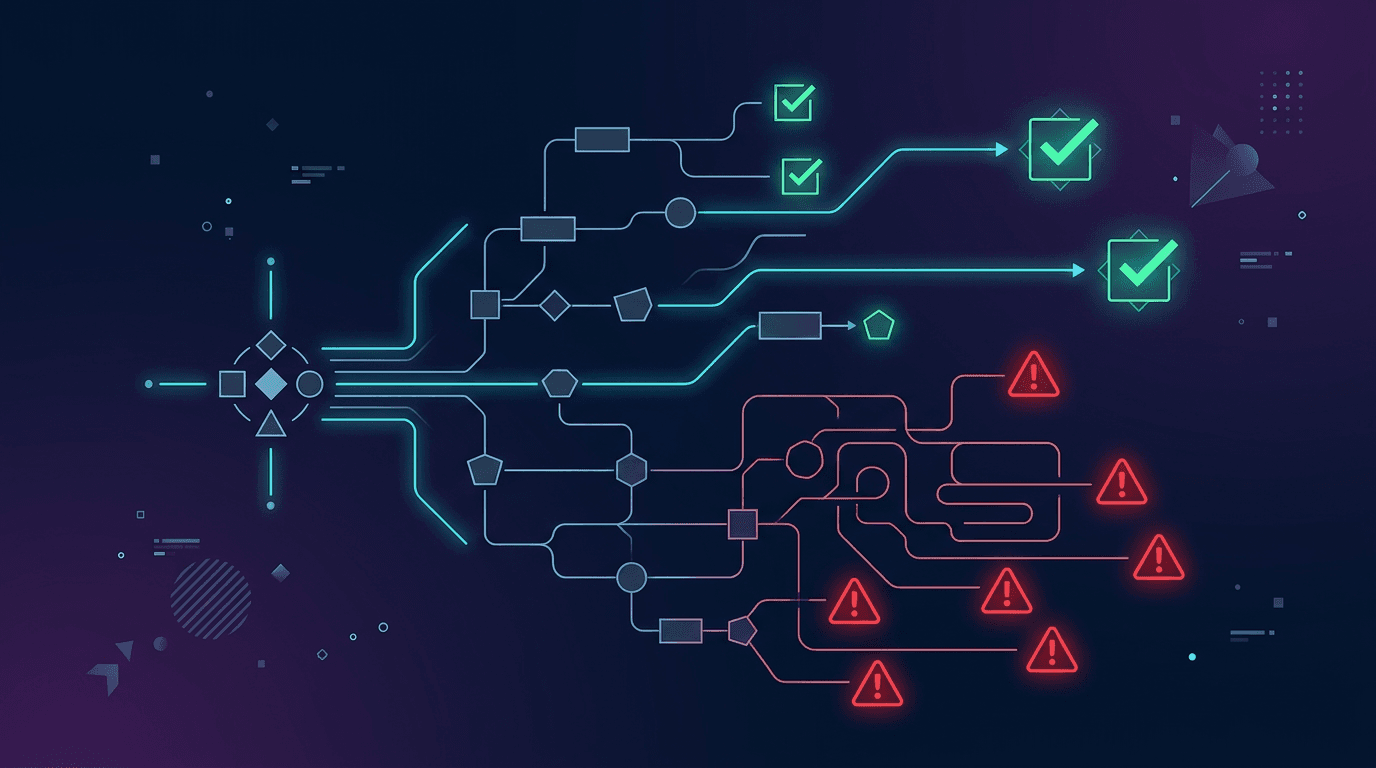
Most AI projects fail because the workflow, permissions and fallback paths were never thought through properly.
Businesses are moving past chatbot demos and asking for AI systems that can do real work. A support agent that can look up orders, a procurement assistant that can place purchase requests or a document reviewer that can flag compliance gaps. These are no longer science fiction. The technology has matured. The question is whether your organisation is ready to deploy it safely.
The hard part is not only model quality. It is workflow design, permissions, integration and control. We have seen teams spend months tuning prompts while the real failure points (who can the agent call, what can it change, what happens when it is wrong) go unaddressed. When the demo works in a sandbox, it is easy to assume production will be fine. It rarely is. As one client put it: "The demo looked great. Production was a different story."
Take a simple example: an AI that drafts customer emails. If it can send them without review, one bad output can damage trust. If it can only draft and a human approves, you have a guardrail. The difference is not the model. It is the workflow. The same technology can be safe or dangerous depending on how you design the human-machine boundary.
Permissions matter just as much. An agent that can read from your CRM but not write to it is safer than one with full access. Role-based access should apply to AI the same way it applies to people. If a junior support rep cannot approve refunds above a threshold, the AI should not be able to either. Least privilege is not optional. It is the bar.
Integration points are another common blind spot. An agent that calls your billing API needs to understand rate limits, error codes and retry logic. It needs to know when to stop and escalate. We have seen agents that retry forever when an API returns 429 or read a timeout as success. These are not model problems. They are integration design problems. In our work with Looper Insights, we built an AI-powered analytics platform where the data layer, access controls and LLM integration had to be set up together from day one. Otherwise the smart summaries would have been built on shaky foundations.
Fallback paths are often forgotten. What happens when the model returns nonsense, when the API is down or when the user asks something out of scope? A clear fallback (escalate to a person, show a canned response or log for review) prevents silent failures. The best builds define these paths before go-live, not after the first incident.
Monitoring and observability are just as important. You need to know when the agent is struggling: high latency, repeated retries, unusual input patterns. Dashboards and alerts should be part of the initial design. If you cannot see what the agent is doing, you cannot improve it or fix it when things go wrong.
The best starting point is a narrow use case with clear success measures, strong guardrails and a safe fallback path. Start small, learn, then expand. Do not try to build a general-purpose assistant in one go. The teams that succeed with agentic AI are the ones that pick one workflow, nail it and only then add the next. We have seen it work and we have seen the alternative.